The Long Antiquity: Greece and Greek throughout the Ages
Does Modern Greece owe much of its present existence to Ancient Greece? Temples, archaeological sites and museums are abvious physical reminders of the past, but many argue that ancient Greece still influences Modern Greek life in language, culture, and the physical world
Does the fact that the Modern Greek proverb ‘και του πουλιού το γάλα’ (meaning ‘the milk of the bird’) echoes the Ancient Greek ὀνιθῶν γάλα (‘the milk of birds,') which appears in ancient texts from the 5th c. BCE into the 4th c. CE, suggest continuity? Is the use of ‘tamata,’ small pressed metal plaques of body part images hung before icons in some Orthodox churches in Greece as the faithful pray for healing, a continuation of an ancient cultural practice: similar objects, but of terracotta, were found in ancient temples of Asclepius, the ancient god of healing; examples are in the archaeological museum of ancient Corinth?
The symposium forming part of the launch of the new Cambridge Cente for Greek Studies, seeks to stimulate debate around this enduring issue which continues to provoke passionately held views.
Speakers
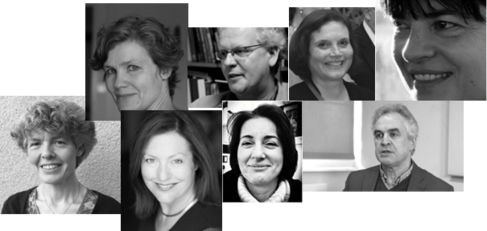
Professor Gonda Van Steen
Koraes Chair of Modern Greek and Byzantine History, Language and Literature and Director Centre for Hellenic Studies, King's College, London.
Professor Constanze Güthenke
Associate Professor of Greek Literature, Faculty of Classics, University of Oxford.
Professor Mark Janse
BOF-ZAP Research Professor in Asia Minor and Ancient Greek, Faculty of Arts and Philosophy, Ghent University.
Professor Edith Hall
Professor in the Department of Classics and the Centre for Hellenic Studies at King’s College, London
Professor Irene Lemos
Professor of Classical Archaeology, Faculty of Classics, University of Oxford.
Dr. Regina Karousou-Fokas
Affiliated Lecturer in Modern Greek Language and Linguistics, Faculty of Modern and Mediaeval Langauges, University of Cambridge.
Dr. Liana Giannakopoulou
Affiliated Lecturer in Modern Greek Literature, Faculty of Modern and Mediaeval Langauges, University of Cambridge.
Each speaker will present a unique and fascinating insight into aspects of the history, culture, and languages of the Greek peninsula and its associated territories. It promises to be an absorbing day and a fitting way to launch the Centre.